
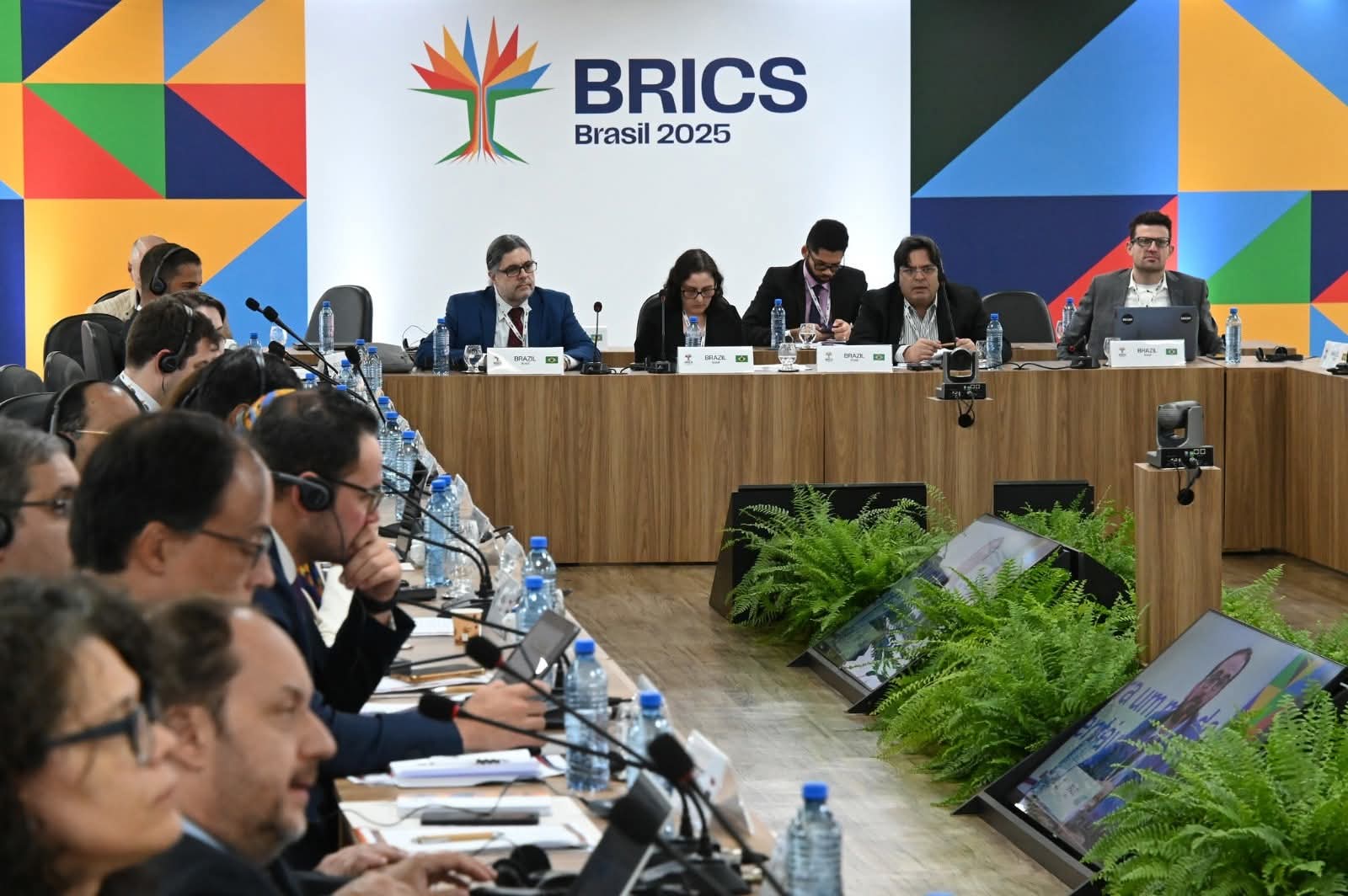
The two-day forum featured an intensive agenda, including six discussion sessions. Topics covered included cooperation in health, AI governance, trade, investment, finance, climate change, multilateral peace and security, and institutional development. The event concluded with a formal closing session that presented the forum's outcomes and future recommendations.
During the conference, Dr. Osama El-Gohary, Assistant Prime
Minister and Head of the IDSC, underscored Egypt's
commitment to bolstering research collaboration within the BRICS framework. He
emphasized the importance of supporting partnerships among Global South nations
through shared knowledge, expertise exchange, and academic dialogue in areas
critical to these countries.
El-Gohary also detailed Egypt's efforts regarding the issues
discussed in the forum's workshops and outlined ongoing mechanisms to maximise
the benefits of cooperation with the BRICS group across various discussion
topics.
A key highlight was the establishment of the "BRICS Unit"
under the Cabinet's presidency. This organisational framework aims to unify the
visions of ministries and relevant entities, including the private sector, and
to accelerate Egypt's integration into the group's cooperation mechanisms.
Discussions also touched upon Egypt's strategic directions
to enhance its standing in trade, investment, and finance, aligning with the
goals of "Egypt Vision 2030." Proposals were presented for
strengthening cooperation mechanisms among BRICS countries, including challenges
and opportunities related to using local currencies in trade within the bloc.
Mechanisms to support Micro, Small, and Medium-sized Enterprises (MSMEs)
through innovative digital and financial tools were also reviewed.
Cooperation opportunities in supply chains and promoting
sustainable trade were highlighted, with an emphasis on aligning trade policies
with climate commitments without compromising developing nations' development
priorities.
On the sidelines of the forum, the IDSC also participated in
a discussion with the BRICS Think Tanks Network on Finance (BTTNF). This
session focused on preparing two studies to enhance cooperation among BRICS
countries this year: "Credit Ratings and Development Finance among BRICS
Countries: International Context and Egypt Case Study," and "Innovative
Climate Finance Tools."
During the closing session, El-Gohary stressed the
importance of translating the forum's outcomes into practical policies that
benefit Global South countries.
The forum concluded with the release of a preliminary report
on cooperation mechanisms within the BRICS group, identifying over 180 such
mechanisms among member states. The report underscores the commitment of member
countries, including Egypt, to promoting transparency and facilitating data exchange
among national institutions.
The report highlighted Egypt's involvement in numerous
cooperation mechanisms across 10 vital sectors: agriculture, energy, education,
economy, science, culture, labour, security, and social development. This
reflects Egypt's growing integration into the BRICS institutional structure and
enhances its capacity to contribute to shaping a more inclusive agenda
representing the interests of Global South nations.
Prime Minister Dr. Moustafa Madbouly instructed the BRICS
Unit's technical secretariat to translate the report into Arabic. This will
facilitate coordination with the Ministry of Foreign Affairs and sharing with
various ministries and relevant entities, thereby enhancing Egypt's engagement
and benefits from the bloc's mechanisms.
It's noteworthy that the IDSC formally joined the BRICS Think Tanks Network as an official representative. This coincided with Egypt's accession to the BRICS Think Tank Council (BTTC) this year and the BRICS Think Tanks Network on Finance (BTTNF) in 2024. This marks Egypt's inaugural participation in the annual Academic Forum, a precursor to the BRICS Leaders' Summit, which aims to offer strategic recommendations to decision-makers within the bloc.