
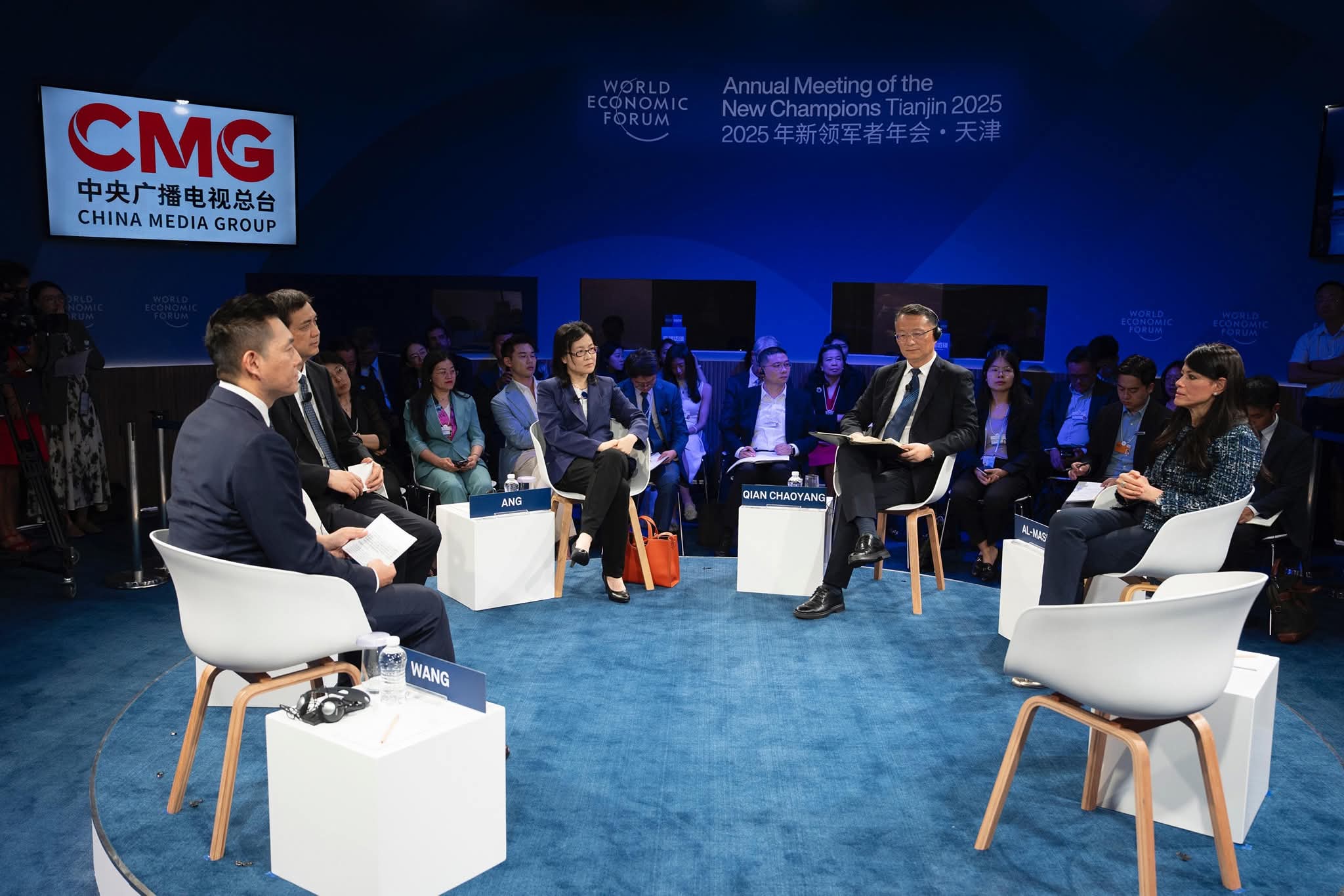
Al-Mashat underscored that international partnerships are rooted in mutual interests. She highlighted the BRI's significance, noting the initiative's 10th anniversary last year. Participating nations showcased sustainable infrastructure projects in transport, renewable energy, and ports, all aligned with their national priorities. For Egypt, these projects consistently supported the country's strategic objectives.
The Minister described the Belt and Road Initiative as a
real catalyst for advancing national strategies. She also noted the recent
emergence of various national and international initiatives that complement the
initiative, including China's Global Development Initiative, which features
parallel and supportive projects.
Al-Mashat addressed project financing, stating that a
significant portion came through development finance. In Egypt, sustainable
transport and renewable energy projects have seen substantial resource
mobilization from the private sector, including low-cost development finance
that has spurred investments.
She emphasized the pivotal role of Chinese President Xi
Jinping's 2014 visit to Egypt, which initiated a significant phase in bilateral
relations, followed by a Memorandum of Understanding on the Belt and Road
Initiative. Relations between the two nations are built on Chinese investments
in Egypt and intergovernmental development cooperation.
Development cooperation spans health, satellites, and
capacity building, with the China International Development Cooperation Agency
(CIDCA) actively supporting Egypt's development agenda. China also signed a
debt-swap agreement with Egypt several years ago.
Beyond development, Egyptian-Chinese relations thrive on
investment and trade. Al-Mashat pointed to the large presence of Chinese
companies in Egypt's industrial zone, with over 150 firms employing more than
10,000 people across diverse sectors.
Al-Mashat stressed the Belt and Road Initiative's
flexibility, stating it does not impose a fixed plan or a centralized blueprint
on participating countries. Instead, it adapts to each nation's individual
priorities.
Addressing global financing challenges, Al-Mashat mentioned
the upcoming "Financing for Development" conference in Seville on
June 30. This decennial UN conference focuses on funding development in
emerging and developing economies. A key message from the conference, she
noted, is the global need to reduce reliance on debt and boost private sector
resource mobilization for development projects.
Al-Mashat reiterated that countries retain full ownership in designing projects aligned with their national visions, which are then integrated into the broader Belt and Road Initiative framework. The cost of implementing these projects remains a shared global challenge, necessitating innovative solutions and diverse funding sources. She highlighted various international initiatives addressing debt, including "debt-for-development and investment swaps."