
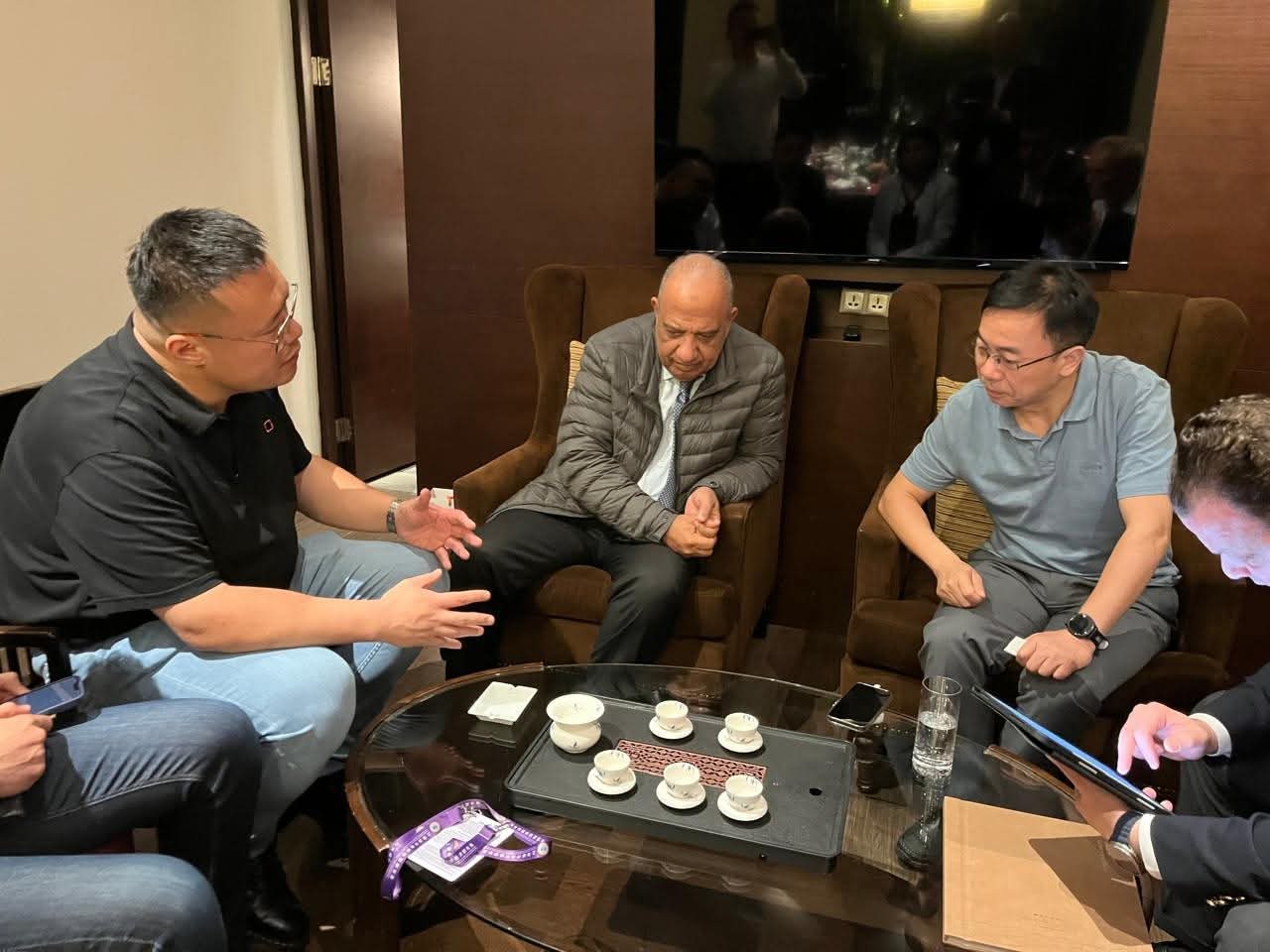
During his visit, Esmat met with James Wa, Chairman, and Thompson Meng, Vice Chairman of the Chinese Sungrow Group, a prominent company in renewable energy equipment, control devices, solar inverter regulators, energy storage batteries, and electric charging systems. The discussions focused on potential cooperation, partnership mechanisms, and the establishment of a Sungrow factory in Egypt for energy storage batteries and solar electrical equipment. This move aligns with Egypt's national energy strategy, which emphasizes reliance on renewable energies and technology transfer.
The meeting highlighted Sungrow's past contributions to
Egyptian renewable energy projects and the mutual benefits of a local factory
in Egypt. The strong Egyptian market, coupled with existing trade agreements,
presents significant export opportunities to regional countries, addressing the
demand for the Chinese company's products and manufacturing technology. All
aspects necessary to initiate work were discussed, considering Egypt's plans
and extensive projects for solar and wind power generation, as well as the
country's trade exchange agreements and exemptions that facilitate exports to
surrounding markets.
Dr. Esmat underscored Egypt's commitment to supporting
industry localization, particularly in renewable energy, equipment, and storage
batteries. This is part of a comprehensive vision to foster industry and
technology transfer, aiming for renewable energy to contribute over 42% of the
energy mix by 2030 and 65% by 2040. He noted that Egypt's national energy
strategy and its private-sector-led implementation plans have generated
substantial market demand for renewable energy equipment. Discussions are
ongoing with various equipment suppliers to establish factories in Egypt,
leveraging state support for industry localization and technology transfer,
along with new regulations from the Ministry of Electricity to boost local
content in projects.
Esmat also highlighted Egypt's complete overhaul of its
infrastructure and the strengthening of a legislative framework designed to
encourage private sector investment in all fields, especially renewable energy.
He stated that the Ministry of Electricity and Renewable Energy's program aims
to position Egypt as a regional energy hub, connecting energy markets across
Africa, Europe, and the Middle East, thanks to its strategic location and core
infrastructure projects. He cited existing electricity interconnection projects
with Sudan, Libya, and Jordan, as well as the ongoing project with Saudi
Arabia, slated for operation this year, and the shared vision for electricity
interconnection with European Union countries.
Key projects, such as the electricity interconnection between Egypt and Greece, and Egypt and Italy, are crucial for regional energy integration. These initiatives facilitate the cross-border transfer of clean electricity, meeting countries' sustainable energy needs and stabilizing power grids. Esmat emphasized that these projects and the significant volume of work they entail are vital incentives for international companies to transfer and localize necessary industries, particularly given the support, facilities, and readiness for joint action from relevant Egyptian authorities.