
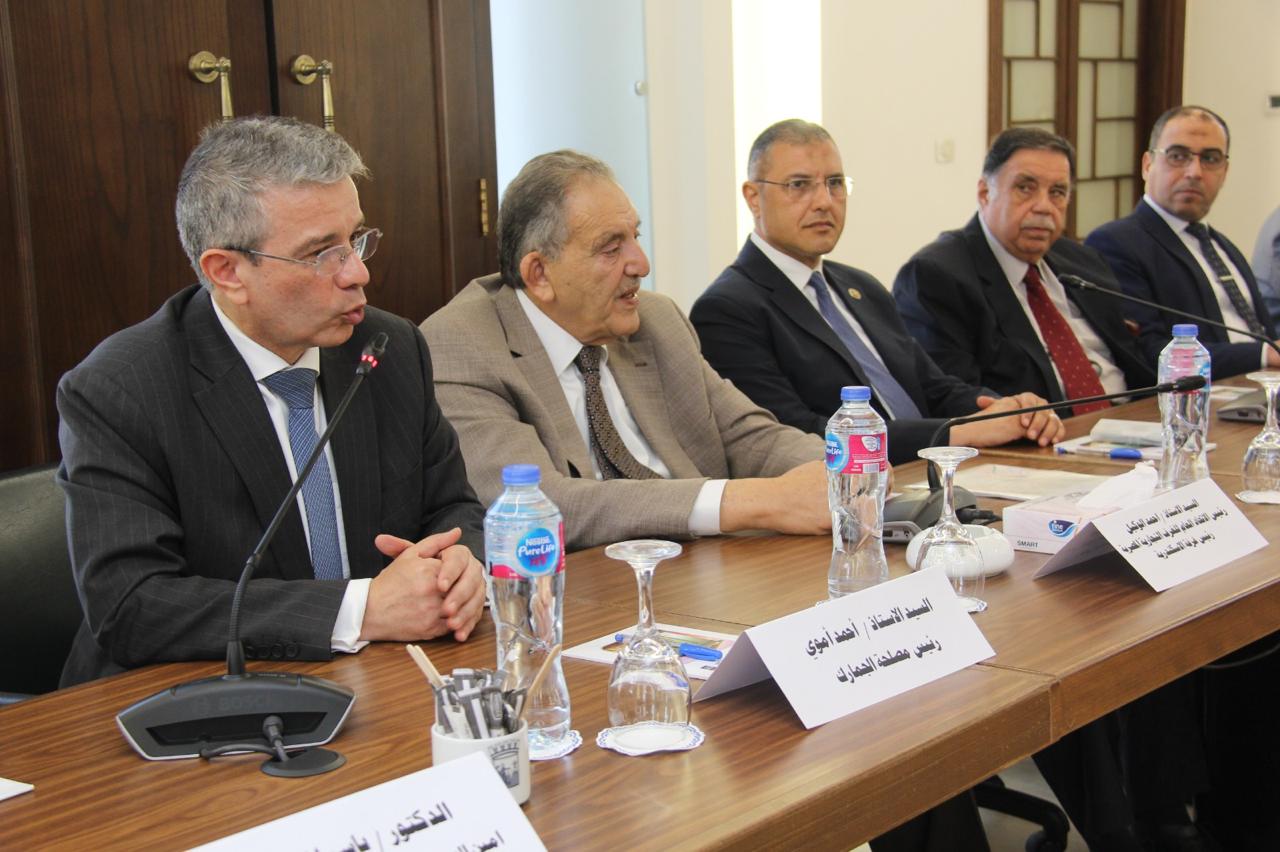
Amawi stressed that the Customs Authority places great importance on training and building customs human capacity. He noted that the next phase aims to qualify a professional generation of customs professionals to lead institutional development efforts.
He added that improving the efficiency of the customs human resource is one of the most important pillars of the development strategy, as it has a direct impact on improving performance indicators, facilitating procedures, and reducing customs clearance times.
El-Wakil explained that investing in human resources is fundamental to improving institutional performance and supporting the national economy. He emphasized that sustainable cooperation between the public and private sectors enhances the efficiency of the customs system and serves the state's goals.
He pointed out that organizing such courses reflects a growing awareness of the importance of specialized training and contributes to achieving integration between the efforts of government agencies and economic institutions in developing the institutional structure of Egyptian Customs. He said that the trainees were introduced to the legislation and procedures that would facilitate their work within the customs system.