
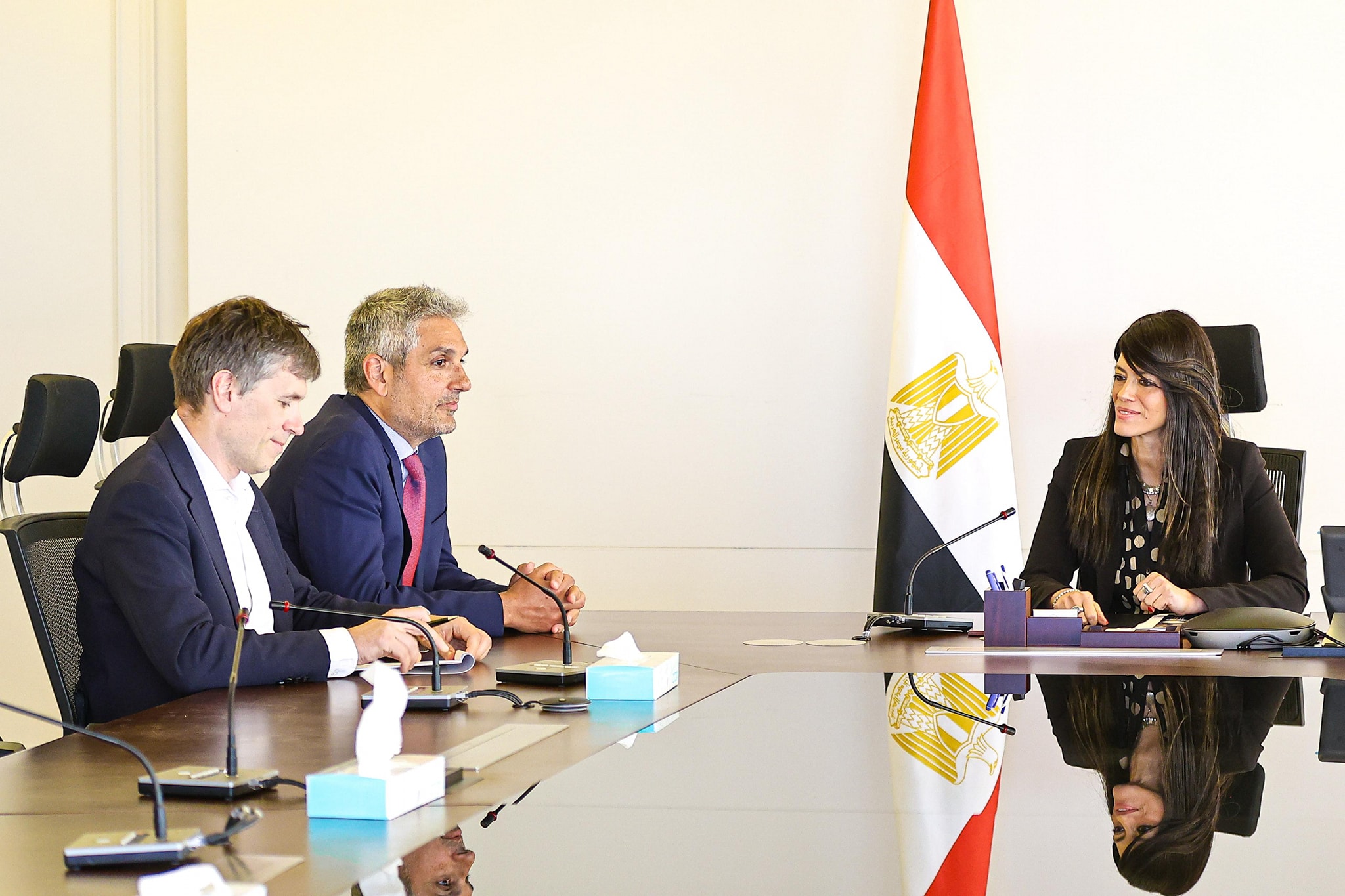
During the discussion, Dr. Al-Mashat emphasized the government's steadfast commitment to macroeconomic stability since the inception of its economic reform program, viewing it as a top national priority for boosting confidence and credibility in the Egyptian economy. She highlighted the importance of sustaining this stability and implementing the National Structural Reform Program. This program rests on three pillars: enhancing macroeconomic resilience and stability, improving the business and investment climate, and driving the transition to a green economy.
As part of this program, numerous national entities are executing
various measures and policies to strengthen public finance control and
alleviate investor burdens. For the first time, the state is cataloging all
investor fees to unify them into a single framework, a directive from President
Abdel Fattah El-Sisi. The government has also established a national committee
for the World Bank's upcoming "Doing Business" report, which will
measure and monitor actions taken to enhance the business environment and
bolster Egypt's economic competitiveness. Dr. Al-Mashat also noted ongoing
initiatives to foster the transition to a green economy.
The Minister discussed the national narrative for economic
development, highlighting the state's determination to shift Egypt's economic
growth model towards tradable and export-oriented sectors. She pointed to
positive developments in the first half of the current fiscal year, which
showed growth driven by non-petroleum manufacturing, tourism, transport and
storage, and ICT sectors, despite regional and global geopolitical tensions.
She also reviewed Egypt's robust relationships with
international institutions and development partners in mobilizing development
finance, particularly for the private sector. She noted a positive shift in
financing volume, coinciding with economic and structural reform measures,
which led to an increase in financing to approximately $4.2 billion by the end
of last year, exceeding government financing for the first time. She also
mentioned ongoing negotiations with the European Union for the second phase of
macroeconomic assistance and budget support, valued at €4 billion.
Al-Mashat also touched upon the state's measures to empower the private sector and create opportunities for local and foreign investments through the implementation of the State Ownership Policy Document. She explained that the state is working on three main axes in this regard: The Sovereign Fund, which aims to increase the return on assets and maximize their benefit for future generations, the Government Offerings Unit within the Cabinet, and a forthcoming law currently under discussion, pertaining to the management of state-owned or state-contributed companies. This law will enable the creation of a unit to inventory and monitor state-owned companies, which will undertake various tasks, including identifying the best methodologies for dealing with these companies to enhance private sector empowerment efforts.
Concurrently, she highlighted the partnership with the International Finance Corporation (IFC), which provides advisory services to strengthen public-private partnerships in the airport sector, with the aim of improving infrastructure, connectivity, and passenger services.