
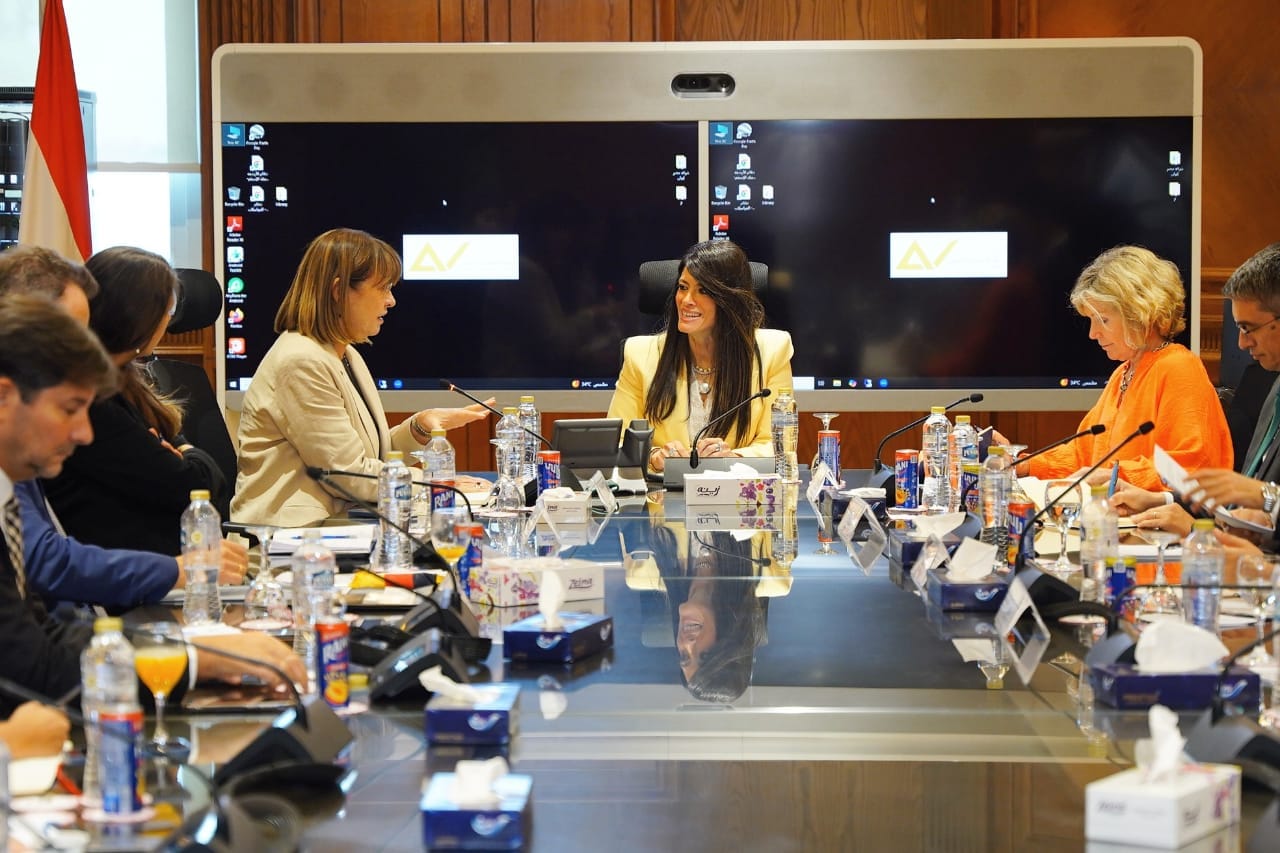
Representatives from various international bodies attended, including the French Development Agency (AFD), the German, Canadian, Japanese, French, and UK Embassies, and the World Bank. This gathering served as a crucial platform to strengthen communication channels, foster strategic consultation, and reinforce joint cooperation frameworks to achieve the Sustainable Development Goals (SDGs) and Egypt's Vision 2030
Discussions focused on national priority issues, emphasizing
the need to intensify and focus partners' efforts to ensure full coordination
between national development plans and cooperation programs. This approach aims
to maximize and sustain the developmental impact of available resources more
efficiently, especially given the global trend of reduced development
financing.
Dr. Al-Mashat highlighted the meeting's role in identifying
cooperation areas that foster synergy and coordinate development programs,
ensuring alignment with national strategies and avoiding duplication. She
stressed the importance of diversifying financing sources, relying on private
sector investments, and utilizing blended finance. The diverse attendance
underscored international interest in supporting Egypt's economic and social
development and a shared commitment to continued strategic partnership.
The Minister outlined the Ministry of Planning and Economic
Development and International Cooperation's expanded role in formulating
economic development policies, driving financing for development, and
maximizing concessional development financing. This involves ensuring
high-level coordination between government entities and development partners to
optimize investment and project impact on the national economy.
She also presented the Ministry's framework, "Sustainability
and Financing for Economic Development," which focuses on building a
resilient and sustainable economy based on data to improve resource allocation
and support priority sectors. This framework aims to promote sustainable economic
growth driven by export-oriented sectors, improve the business environment,
empower the private sector, and drive structural reforms that enhance economic
competitiveness.
Furthermore, Dr. Al-Mashat referenced Egypt's Integrated
National Financing Strategy (E-INFS), designed to expand development financing
channels, identify financing gaps, enhance public-private partnerships, and
support critical social sectors like education, health, social protection, and
sanitation. The strategy also seeks to attract green finance and climate change
adaptation projects
The Ministry considers localizing the SDGs at the
governorate level a strategic step towards balanced and inclusive development. Detailed
reports for all governorates, prepared in cooperation with the United Nations
Development Program (UNDP), identify regional strengths, weaknesses, and
development priorities to align local and national plans, thereby achieving
national SDGs and developing robust monitoring and evaluation mechanisms.
Dr. Al-Mashat affirmed the government's strong focus on labor
market dynamics and creating an enabling legislative environment for workers
and employers, a responsibility shared by the Ministry with the Ministry of
Labor.
As chair of the Ministerial Committee for Entrepreneurship, the
Minister emphasized its role as a key economic growth driver. The ministerial
group supports entrepreneurial projects and encourages innovation, particularly
in information and communication technology, to enhance startup success.
The Ministry prioritizes climate issues and environmental sustainability, developing strategies and projects to enhance Egypt's climate change adaptation capabilities, reduce carbon emissions, and strengthen cooperation with development partners in climate finance, including supporting green projects and renewable energy.