
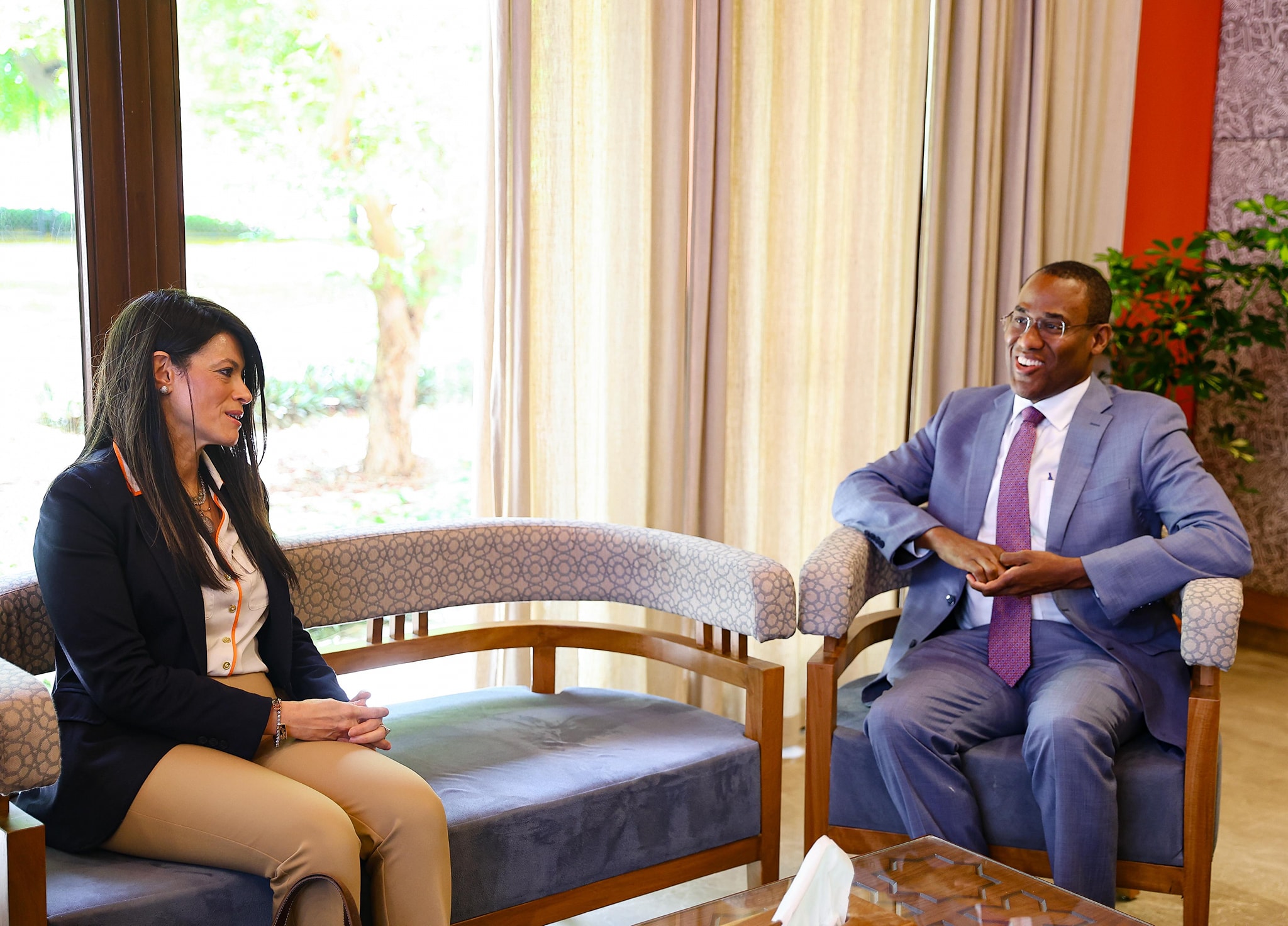
The event drew a high-profile attendance, including Nigel Clarke, Deputy Director General of the IMF, and Jihad Azour, Director of the Middle East and Central Asia Department at the IMF. They were joined by a distinguished group of international specialists, academics, and central bank governors.
Other notable figures included François Bourguignon,
Honorary Chairman of the Paris School of Economics, Barry Eichengreen,
Professor of Economics and Political Science at the University of California,
Martin Galstyan, Governor of the Central Bank of Armenia, and Youssef Boutros
Ghali, member of the Specialized Council for Economic Development. Dr. Mahmoud
Mohieldin, UN Secretary-General's Special Envoy for Financing the 2030
Sustainable Development Agenda, also participated in the conference.
During the session, Dr. Al-Mashat provided an overview of developments
in the Egyptian economy and the new economic model the government aims to adopt
in response to regional and global economic shifts. She highlighted periodic
reports from the IMF that underscore the importance of macroeconomic stability
in Egypt and effective coordination between fiscal and monetary policies. These
policies, she explained, impact society and investors by fostering an
attractive economic environment for private investments. She noted that Egypt's
long-standing adherence to this approach has led to significant economic
transformations.
Since March 2024, Dr. Al-Mashat affirmed, the government has
aimed for a qualitative shift in its economic model. This move seeks to prevent
future exposure to internal and external shocks that previously undermined
economic reform. She highlighted the state's push for harmonized fiscal and
monetary policies, continuous coordination among economic ministers, and
increased public awareness of reform's importance. This strategy bolsters the
economy's adaptability, competitiveness, and attractiveness for investment.
She also discussed the government's ongoing efforts to reduce
the volume of public investments to create more space for the private sector.
As a result, the non-petroleum manufacturing sector has emerged as a key
contributor to economic growth. Furthermore, Egyptian exports are experiencing
a significant recovery, which she attributed to the positive impact of
implementing a flexible exchange rate system.
She added that the Ministry's efforts to strengthen economic ties with international financial institutions have enabled the private sector to secure concessional financing. This has helped reduce financing costs and risks over the past five years. She confirmed that the private sector received a total of $15 billion in concessional financing, with $4.2 billion of that coming in 2024, despite the difficult geopolitical circumstances in the region.