
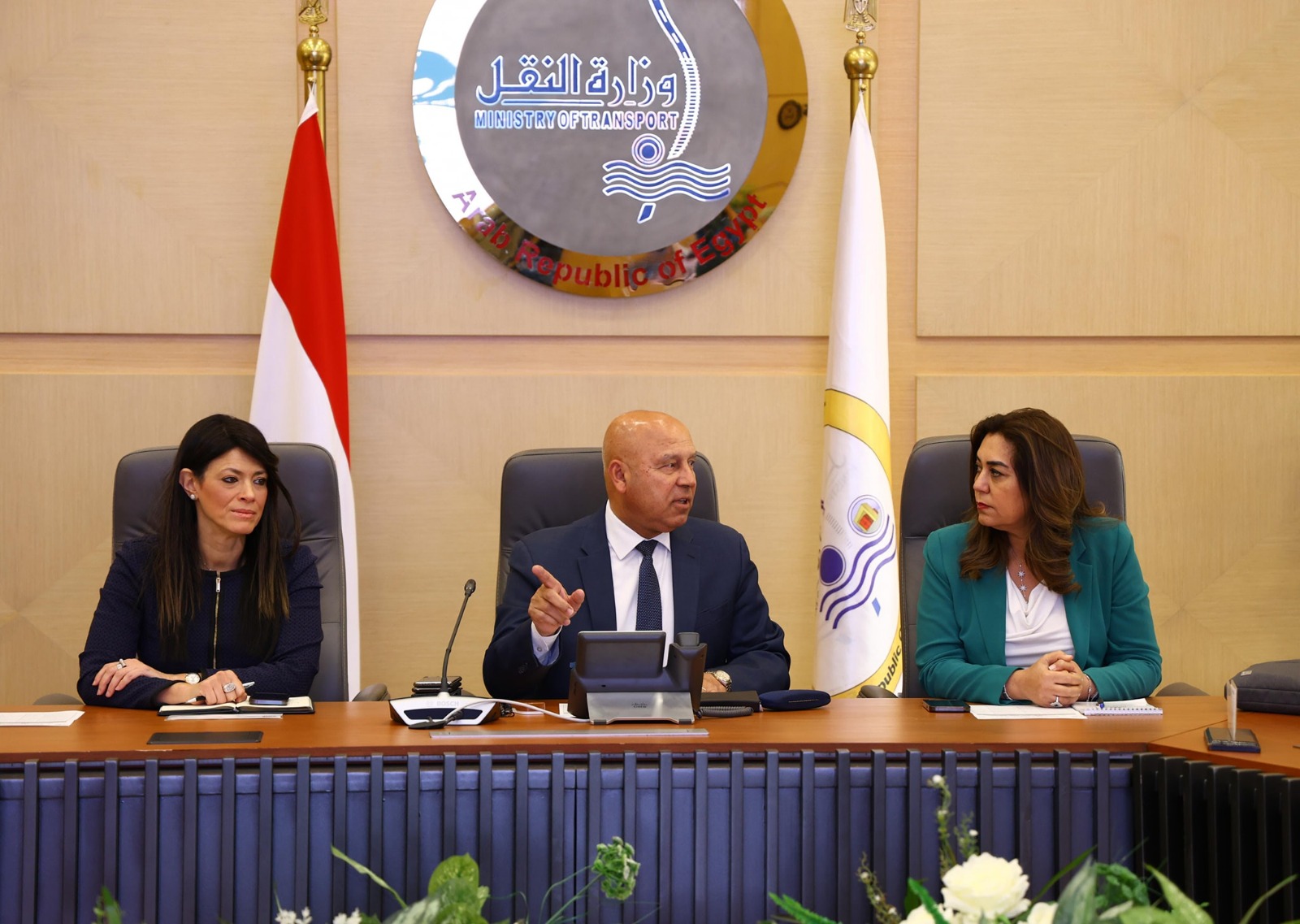
Key attendees included Dr. Khaled Abdel-Aal, Governor of Qena, Major General Abdel-Fattah Serag, Governor of Sohag, Dr. Nahed Youssef, Head of the General Authority for Industrial Development, and Dr. Hisham El-Helbawy, Assistant Minister of Local Development for National Projects and Director of the Local Development Program in Upper Egypt. Leaders from the Ministries of Industry, Transport, Local Development, International Cooperation, and Planning and Economic Development also participated.
Engineer Kamel El-Wazir underscored the Ministry of
Industry's commitment to the timely completion of this significant program. He
emphasized its focus on the economic advancement of several Upper Egyptian
regions. The program aims to cultivate an environment conducive to improved
services and private sector-driven job creation, ultimately maximizing benefits
for the residents of Qena and Sohag governorates. The industrial development
aspect of the program involves providing utilities and constructing roads for
four industrial zones: "Quft" and "Ho" in Qena, and
"West Gerga" and "West Tahta" in Sohag, all under the
purview of the Industrial Development Authority.
During the meeting, they reviewed the progress on the
industrial development component's first phase. This included the installation
of infrastructure networks (electricity, sewage, water, fire protection,
communications, and gas) and the completion rates for utility works. Furthermore,
the second phase's progress, encompassing road construction, landscaping, fence
and gate installation, main distributor and cable laying, and the creation of
service and administrative buildings were assessed.
The Minister urged all companies working on utility and road
construction within the program's industrial zones to intensify their efforts
immediately. This acceleration is crucial to finalize the provision of essential
utilities, ensuring maximum benefits for industrial investors across these four
key areas. He firmly assured the companies that the Ministries of Transport and
Industry are fully prepared to provide comprehensive support, guaranteeing the
timely completion of all program tasks, potentially even ahead of the
established deadlines.
Minister El-Wazir further announced the upcoming
advertisement in early June of vacant industrial plots on the Egypt Industrial
Digital Platform. These plots are situated within the "Quft,"
"Ho," "West Gerga," and "West Tahta" industrial
zones, and investors will be able to submit applications. Additionally, he
directed the Industrial Development Authority to conduct a review of land and
industrial units in these zones that have already received operating licenses
but have not yet shown serious intent through industrial registry acquisition
or technical inspection. This review may lead to the cancellation of their
current allocation and a subsequent re-offering to committed industrial
investors.
Dr. Rania Al-Mashat emphasized the substantial progress of
the Egyptian government and World Bank's collaborative Local Development
Program in Upper Egypt, particularly since the Ministerial Coordination
Committee's formation. She highlighted the program's effective execution and
numerous accomplishments, projecting its completion by October of this year.
Furthermore, she underscored the critical role of on-site
monitoring in tracking the program's advancements, noting its recognition by the
United Nations as a best practice for achieving the 2030 Sustainable
Development Goals. She reiterated the Ministry's dedication to enhancing
oversight of development partner-funded projects through regular meetings,
quarterly progress reports, and an electronic monitoring system, all designed
to optimize the use of concessional development financing.
Dr. Manal Awad noted the rising completion rates of utilities in the four industrial zones in Qena and Sohag. This progress, achieved through collaboration between the Ministry of Industry and the Industrial Development Authority, supports the government's strategy to boost the competitiveness and efficiency of these zones to attract more investment, despite previous obstacles.