
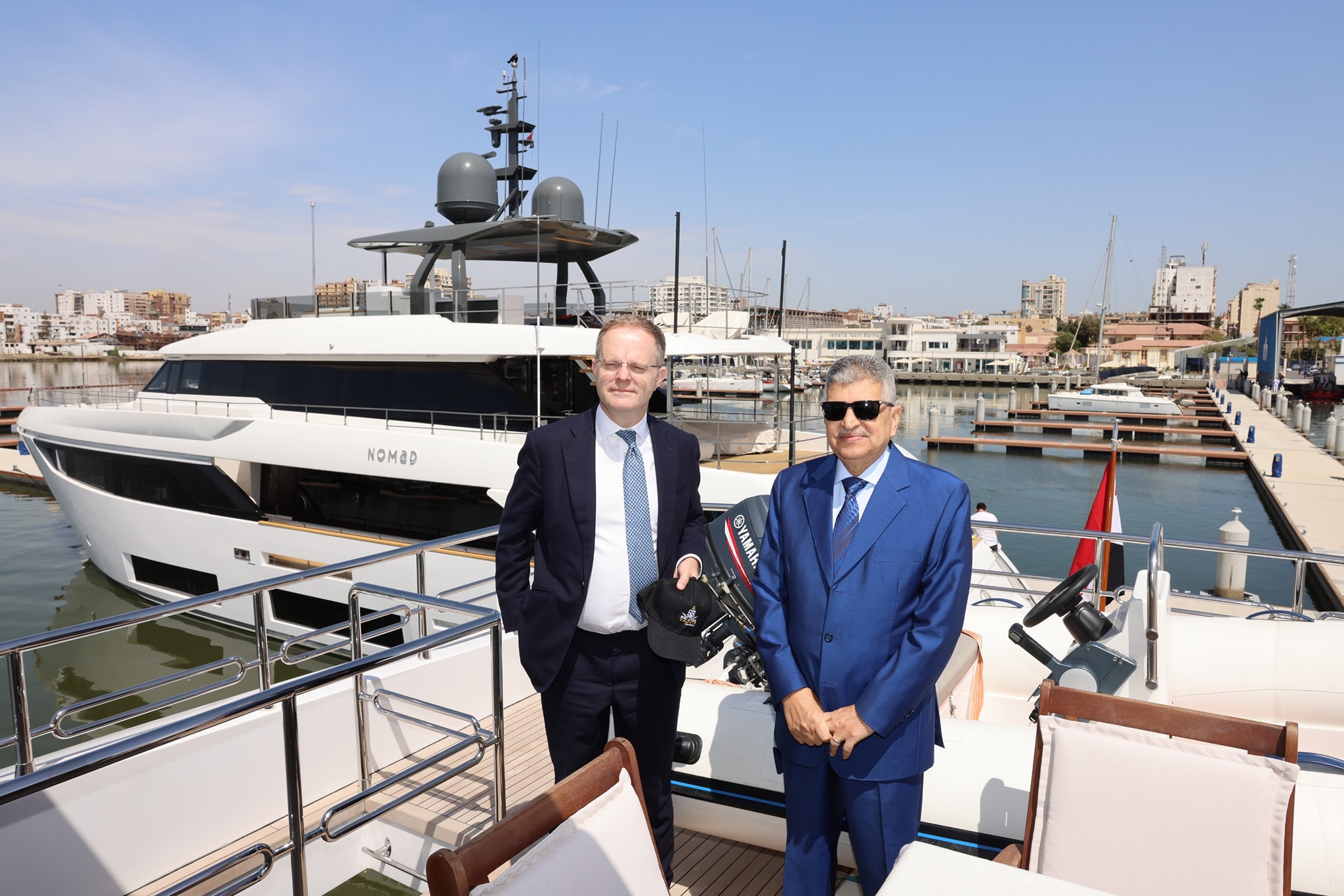
During their discussion, the two parties addressed the impact of recent security developments in the Red Sea and Bab al-Mandab region on the freedom of navigation in that area. Furthermore, they explored mechanisms for negotiating with British insurance companies to potentially lower marine insurance fees for vessels transiting the region.
Rabie affirmed the Suez Canal Authority's strong commitment
to its crucial role in facilitating global trade and ensuring the stability and
sustainability of international supply chains, even amidst the present
challenges in the Red Sea and Bab al-Mandab region.
He explained that the Suez Canal has maintained
uninterrupted services since the onset of security tensions in the area. Instead,
it has addressed the crisis with remarkable adaptability by establishing direct
and effective communication channels with all relevant stakeholders, including
clients and international maritime organizations, and by introducing a range of
novel maritime and logistical services not previously available.
Rabie highlighted that the Suez Canal has undergone a
substantial advancement in the development of its primary navigational
infrastructure. The Southern Sector Development Project, a significant
enhancement expected to improve navigational safety and mitigate the impact of
water and air currents, has been finalized. This project will also increase the
canal's capacity by 6 to 8 vessels.
The Chairman of the Authority further stated that the Suez
Canal has made considerable progress in developing and modernizing its maritime
fleet. Over the recent period, the Authority has successfully launched 23
diverse marine units, encompassing tugboats, marine launches, support vessels,
ferries, and other types.
Gareth Bayley, the British Ambassador to Cairo, lauded the
Suez Canal Authority's efforts in addressing the present challenges. He
emphasized the canal's strategic significance as the vital center of global
trade, a fundamental element for the stability of international supply chains
and the global trade system, and for realizing the objectives of globalization.
The British Ambassador further asserted that the limitations
imposed on the freedom of navigation by the security tensions in the Red Sea
region, and the resulting necessity for many major companies and shipping lines
to reroute via the Cape of Good Hope, signify a regression due to heightened
maritime and environmental risks and the absence of navigational services along
that route.
Bayley conveyed his appreciation for the significant measures undertaken by the Egyptian state to foster foreign investment. He noted the provision of necessary facilities and substantial amendments to the procedural system, which have positively influenced the growth of British investments in clean energy and green hydrogen sectors within the Suez Canal Economic Zone. The visit concluded with a maritime tour of the New Suez Canal and a visit to the Suez Canal Museum.