
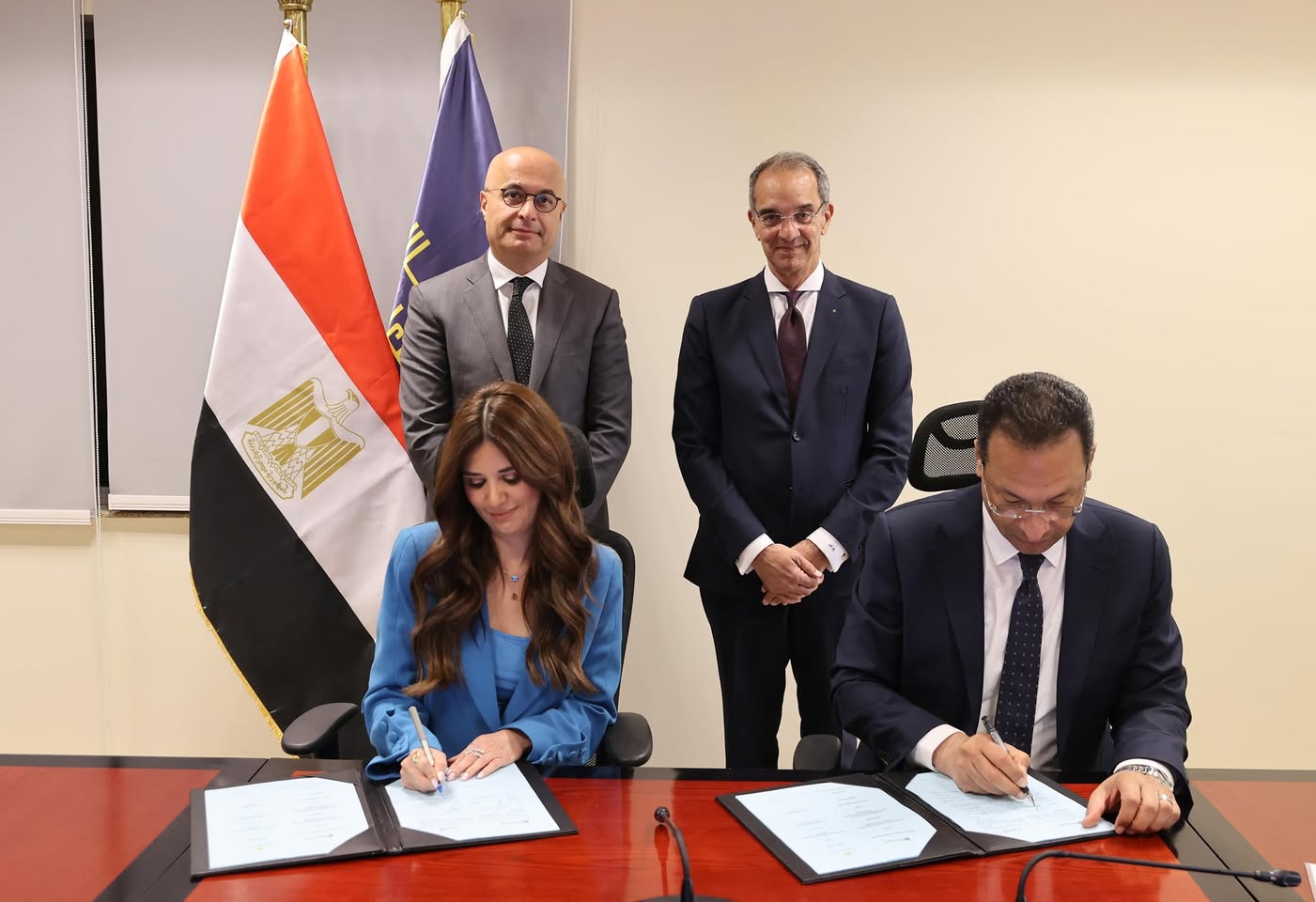
Building on existing cooperation, the MoU was signed by Engineer Raafat Hindi, Deputy Minister for Technological Infrastructure Development and Digital Transformation, and Engineer Mirna Aref, General Manager of Microsoft Egypt, in the presence of officials from both entities.
Minister Talaat underscored the agreement's role in
accelerating the adoption of AI technologies across sectors, leveraging their
potential for Egypt's socio-economic development and a stronger digital
economy. He highlighted that this collaboration supports the second phase of
the National AI Strategy, which aims to establish a comprehensive AI ecosystem
through data governance, robust infrastructure, supportive regulations, and
crucial skills development. The partnership with Microsoft is key to enhancing
national AI talent and fostering responsible and sustainable AI practices through
knowledge exchange and global best practices, contributing to Egypt's
development objectives.
Key areas of collaboration under the MoU include training
approximately 100,000 individuals, including youth, IT professionals, and
government digital transformation personnel, on AI technologies through
comprehensive content, tailored learning paths, and practical training by
Microsoft, including train-the-trainer programs.
Microsoft will offer technological and sectoral guidance to
government entities in identifying and implementing AI-driven commercial
applications and technological solutions to boost innovation, efficiency, and
productivity; Promoting the responsible use of AI through shared expertise on
AI governance and joint workshops to raise awareness of the Egyptian Charter
for Responsible AI; establishing a multi-stakeholder forum on AI governance and
related regulations, facilitating the exchange of information and best
practices in regional and global AI regulatory frameworks.
Samer Abu-Ltaif, President of Microsoft for the Middle East,
Africa, and Asia, reaffirmed the company's commitment to digital transformation
and empowerment through innovation. He emphasized the importance of responsible
AI and digital skills development as central to Microsoft's mission and
highlighted the strategic nature of the continued partnership with Egypt's MCIT
in achieving the National AI Strategy's goals for a thriving digital economy
and sustainable development.
Dr. Hoda Baraka, Advisor to the Minister for Technological
Skills Development, emphasized the strategic importance of the partnership with
Microsoft in advancing digital transformation and innovation. She noted the MoU's
focus on developing skills aligned with global technological advancements,
preparing a generation capable of leveraging AI for solutions across sectors,
and promoting the responsible and sustainable use of AI for the benefit of
society. She also expressed aspirations to extend this collaboration to other
African nations.
Engineer Mirna Aref stated her pride in the MoU, marking a significant step in the ongoing cooperation with the MCIT. She emphasized the commitment to investing in Egypt's future workforce by training 100,000 individuals in AI, fostering responsible AI adoption, encouraging innovation, driving digital transformation, and building a strong foundation for a knowledge-based digital economy that supports Egypt's socio-economic objectives.