
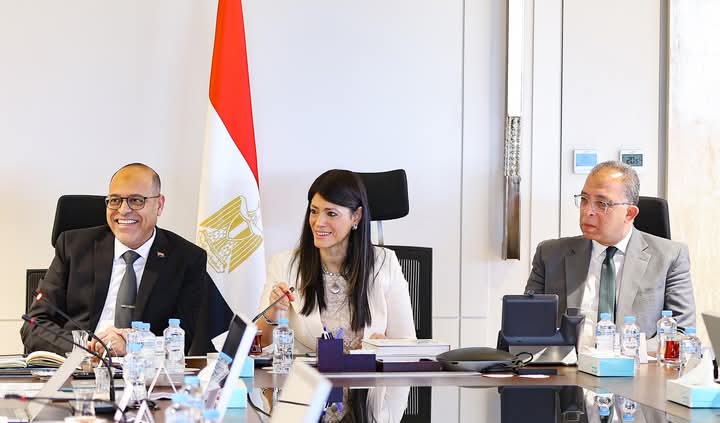
The event was attended by Dr. Ashraf El-Araby, Chairman of the National Planning Institute, Angelina Eichhorst, Ambassador of the European Union to Egypt, Olivia Todrin, Ambassador of Romania to Cairo, Dr. Ragui Assaad, Professor of International Economic Policy at the Humphrey School of Public Affairs at the University of Minnesota, and representatives of several development partners, including the German Agency for International Cooperation (GIZ), the World Bank, the African Development Bank, and others.
The platform comes within the framework of the
“Employment Support” project (EPP), which is implemented by the GIZ in Egypt
within the Egyptian-German Cooperation portfolio, in cooperation with the
Ministry of Education and Technical Education, and the Labor Market Policies
Unit of the Ministry of Planning, Economic Development and International
Cooperation.
The electronic platform provides data and information
on more than 400 occupations in Egypt, according to the Egyptian Unified Occupational
Classification Guide, representing approximately 98% of the total number of
employed people in the country. Each professional profile outlines the main
tasks of each profession, in addition to a number of indicators, including the
employment growth rate, the distribution of workers by economic activity,
geographical distribution, average wage, minimum educational requirements, the
expected employment growth rate for the profession until 2030, and more.
The platform also allows the professions to be ranked
according to the highest wages, the highest growth rate in the number of
workers, the number of expected jobs, and others.
Dr. Al-Mashat stressed that the platform aims to
provide data and information that will inform users of the nature and requirements
of professions in Egypt. This will then help them respond to current changes,
both from an educational and work perspective, contributing to increased
employment rates, economic development, and achieving the goals of Egypt Vision
2030. This is achieved by improving the process of analyzing and presenting
data and information related to professions and making them available to
various segments of society.
She added that the platform provides accurate data to
decision-makers and those working in economic planning, education, and
employment agencies to identify current and future labor market needs and
develop appropriate education and employment policies. This data also helps
students and graduates who are trying to make decisions about their career
paths and directions.
Gobran emphasized the importance of launching the
"Egypt Occupational Outlook" platform, an electronic platform that
provides data and information on 400 professions in Egypt, according to the
Egyptian Unified Occupational Classification Guide. Each occupational profile
outlines the main tasks of each profession, in addition to a number of
indicators, including the employment growth rate, the distribution of workers
by economic activity, geographic location, average wage, minimum educational
requirements, the expected employment growth rate for the profession until
2030, and others.
The platform also allows occupations to be ranked
according to the highest wage, the highest growth rate in the number of
workers, the number of expected jobs, and other criteria. These can be used to
determine future labor market needs.
Gobran also stressed the importance of continuous cooperation between the Ministries of Labor, Planning, Economic Development, and International Cooperation in updating the occupational classification guide according to skills and benefiting from the outputs of that “platform,” explaining that this is to be in line with the needs of the labor market.